


How Children’s Books Can Power Your Entire Lesson

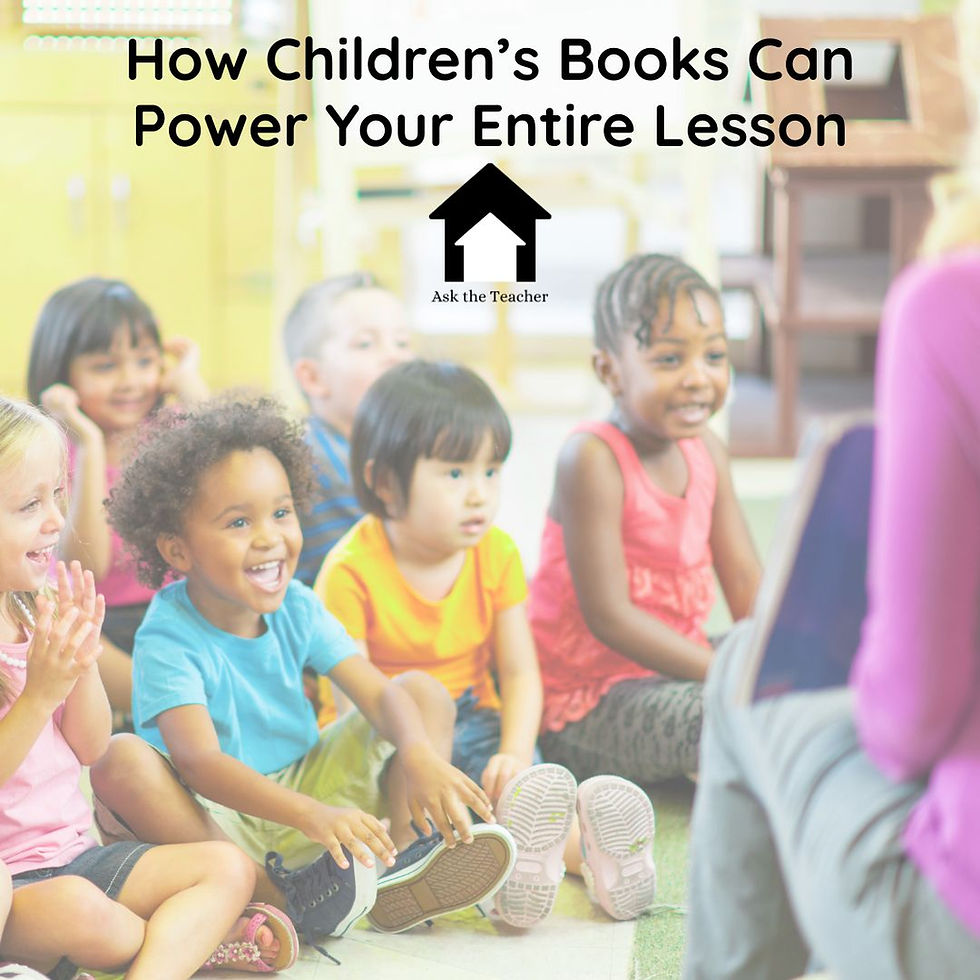
If you’ve ever gathered your students on the carpet for a read aloud and felt the room settle into focus, you already know this truth:
Books are magic.
But beyond engagement, children’s literature is one of the most powerful teaching tools we have. A well-chosen picture book can launch a full lesson in reading, writing, science, math, and even social-emotional learning.
Let’s talk about how to use children’s books not just as a treat—but as a starting point for meaningful learning.
Why Start with a Book?
Children’s books are accessible, relatable, and rich with content. They naturally:
● Build background knowledge
● Introduce vocabulary in context
● Spark curiosity and discussion
● Provide a shared experience for all learners
When you start with a story, you’re giving every student a way in.
Picture Books Make the Perfect Lesson Warm-Up
Think of a picture book as your lesson hook.
Instead of jumping straight into a worksheet or lecture, a quick read aloud can:
☐ Activate prior knowledge
☐ Introduce key concepts in a low-pressure way
☐ Engage reluctant learners immediately
☐ Set a positive tone for learning
Even just 5–10 minutes with a great book can completely shift your lesson.
Read Alouds: More Than Just Story Time
Read alouds are doing so much more than we sometimes realize:
● Build listening comprehension
● Model fluent reading
● Expand vocabulary naturally
● Encourage prediction and critical thinking
● Strengthen classroom community
● Support struggling readers without pressure
And most importantly—they make learning feel safe and enjoyable.
Looking for a fun and memorable way to teach measurement and math concepts?
Ten Gallon Ranch by Jodi Rabitoy is a perfect example of how a story can make math stick.
This engaging, western-themed read aloud introduces students to units of volume like cups, pints, quarts, and gallons through storytelling, humor, and visual connections.
How to Use It in Your Classroom
☐ Warm-Up: Play the read aloud video (or read aloud the physical book) and let students enjoy the story first
☐ Math Focus: Discuss how units of measurement relate to each other. Have students visualize real-life examples and use the memory key suggested in the book
☐ Hands-On Extension: Use classroom containers to model volume relationships
☐ ELA Connection: Have students retell the story or explain how they remember the measurement system
☐ Challenge Activity: Solve the math problem presented at the end of the story
👉 Watch the read aloud here.
Final Thoughts: Start Small
You don’t have to overhaul your teaching.
Start with this:
☐ Pick one book this week
☐ Use it as your lesson warm-up
☐ Add one simple follow-up activity
That’s it.
If you’re reading to your students, you’re already building readers and thinkers.
Now you’re just using that moment to unlock even more learning.
And that’s where the magic happens.



Comments